


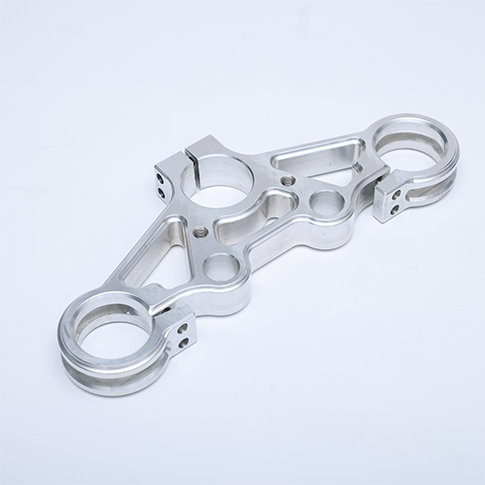
What Factors Affect CNC Machining Costs?
CNC machining costs vary depending on material selection, component geometry, machining time, dimensional tolerances, surface finishing, and production volume. Understanding these factors helps purchasing teams prepare realistic budgets and make informed decisions when sourcing custom CNC machined parts.
Whether you need prototypes, small batches, or high-volume production, evaluating the following cost drivers can help you identify opportunities to improve manufacturing efficiency without compromising part quality.
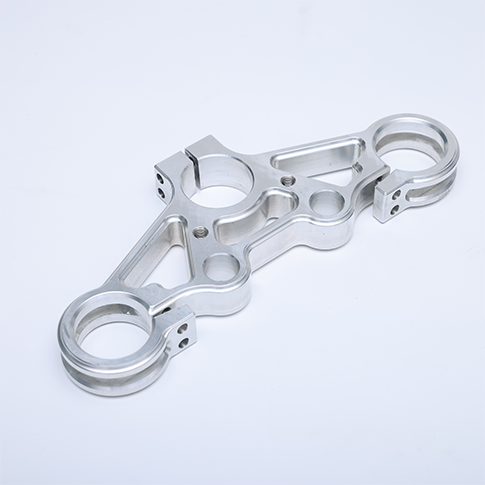
1. Material Selection
The raw material is one of the main factors affecting CNC machining costs. Different materials have different purchase prices, machinability, cutting requirements, and levels of tool wear.
Aluminum: Often selected for its low weight, good machinability, and corrosion resistance in suitable grades.
Stainless steel: Offers corrosion resistance and strength but can require more demanding machining conditions.
Carbon steel: Used for many structural and mechanical components, with cost and machinability depending on the grade.
Brass: Commonly used for fittings and precision components because of its favorable machinability.
Engineering plastics: Suitable for lightweight, insulating, or low-friction components, depending on the material and application.
Material choice should be based on functional requirements rather than price alone. Where multiple materials can meet the same specifications, discussing alternatives with your supplier may help reduce costs.
2. Part Design and Geometric Complexity
Complex part geometry generally requires more machining operations, specialized tooling, additional setups, or multi-axis equipment. Deep cavities, thin walls, intricate contours, and difficult-to-reach features can increase programming and production time.
Design for manufacturability can help control these costs. Simplifying nonfunctional features, standardizing hole sizes where practical, and avoiding unnecessary deep pockets may make a component easier to machine.
However, design changes should never compromise the component's required strength, fit, safety, or performance.
3. Machining Time and Process Selection
The time required to manufacture a part directly influences machine utilization and labor costs. Longer cutting cycles, repeated tool changes, complex setups, and additional finishing operations can increase the overall production cost.
The selected process also matters. CNC milling is suitable for many prismatic parts and complex surfaces, while CNC turning is often efficient for rotational components. Multi-axis machining can reduce repositioning for certain complex parts, although the equipment and programming requirements may be higher.
Choosing the appropriate process for the part's geometry and quantity helps balance machining efficiency, accuracy, and cost.
4. Tolerances and Precision Requirements
Tighter dimensional tolerances may require slower machining, more precise setups, additional measurements, and stricter process control. Some features may also need specialized tools or temperature-controlled inspection conditions.
Specify tight tolerances only where they are necessary for assembly, function, or performance. Applying unnecessarily strict tolerances across an entire drawing can increase costs without providing meaningful benefits.
Clear drawings and well-defined inspection criteria help suppliers understand which dimensions require the greatest attention.
5. Surface Finish and Secondary Operations
Some CNC machined parts require additional processing after machining. These operations can add labor, processing time, and material handling costs.
Common secondary operations include:
Anodizing for suitable aluminum components.
Powder coating or painting for specified protective or decorative finishes.
Polishing or deburring to improve surface condition and remove sharp edges.
Plating or other specified surface treatments for functional requirements.
Heat treatment where required to achieve specified material properties.
The cost depends on the required finish, component dimensions, material compatibility, preparation work, and quantity. Defining the finish clearly in the technical drawing helps avoid unexpected charges.
6. Order Quantity and Production Volume
Order quantity affects how fixed production costs are distributed across individual parts. Programming, fixture preparation, setup, and first-article inspection may require similar initial effort for a small order and a larger batch.
For repeat production, these initial costs can be spread across more units. Batch production may also improve material utilization and reduce repeated setup work. However, larger orders require more total material and machine time, so the total project cost will normally increase even when the unit cost decreases.
When forecasting demand, compare the unit price, total order value, storage requirements, and inventory risks before deciding on the order quantity.
7. Material Waste and Part Layout
CNC machining often removes material from a larger stock blank. Parts with significant material removal, oversized starting stock, or difficult nesting requirements may generate more waste and increase material expenses.
Where the application allows, reviewing the blank dimensions, part orientation, and machining sequence can improve material utilization. A supplier may also recommend a more suitable stock size or production approach.
8. Quality Inspection and Documentation
Inspection requirements can affect the total cost of CNC machined components. Basic dimensional checks may be sufficient for some parts, while critical components may require coordinate measuring machine (CMM) inspection, detailed reports, material certificates, or additional traceability.
These requirements can be important for applications where reliability and dimensional consistency are essential. Define the required inspection scope before requesting a quotation so suppliers can account for it accurately.
How to Reduce CNC Machining Costs
Several practical steps can help control CNC machining costs while maintaining the required quality:
Choose materials that meet functional requirements without unnecessary over-specification.
Simplify noncritical design features where technically appropriate.
Apply tight tolerances only to critical dimensions.
Select a machining process that matches the part geometry and production volume.
Specify surface finishes and inspection requirements clearly.
Discuss batch sizes and repeat-order forecasts with the supplier.
Provide complete and consistent technical drawings to reduce clarification and rework.
Conclusion
CNC machining costs are determined by several connected factors, including material, design complexity, machining time, tolerances, surface treatment, order quantity, and quality requirements. Understanding these cost drivers allows buyers to compare quotations more effectively and identify realistic cost-saving opportunities.
For a more accurate quotation, submit your 2D drawings or 3D CAD files together with the material grade, quantity, critical tolerances, surface finish, inspection requirements, and delivery schedule. A detailed specification gives your CNC machining supplier a clearer basis for evaluating the project.
Frequently Asked Questions
What is the biggest factor affecting CNC machining costs?
There is no single factor that determines every quotation. Material, machining time, part complexity, tolerances, finishing requirements, and production quantity can all have a significant impact depending on the component.
Does ordering more CNC machined parts reduce the unit cost?
Often, yes. Larger batches can spread programming and setup costs across more parts and improve production efficiency. The actual savings depend on the design, material, process, and order schedule.
Can I reduce CNC machining costs by relaxing tolerances?
Where tighter tolerances are not functionally necessary, relaxing them may reduce machining and inspection costs. Critical dimensions should still meet the requirements for fit, function, and performance.
What information is needed for a CNC machining cost estimate?
Suppliers typically need a technical drawing or CAD model, material specification, order quantity, tolerance requirements, surface finish, inspection needs, and target delivery date.