


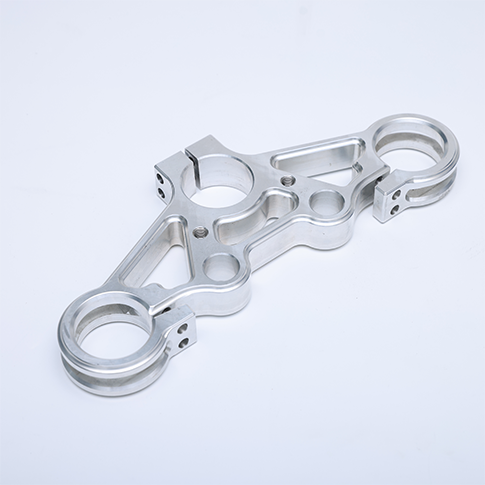
What Parts Are Best Suited for 5-Axis CNC Machining?
5-axis cnc machining is widely used to manufacture components with complex geometries, angled features, and multiple surfaces that require precise machining. By combining three linear axes with two rotational axes, a 5-axis CNC machine can adjust the cutting tool or workpiece to reach features that may be difficult to machine efficiently with conventional 3-axis equipment.
However, not every component requires 5-axis machining. Understanding which parts benefit most from this process helps engineers, manufacturers, and purchasing teams select an appropriate manufacturing solution.
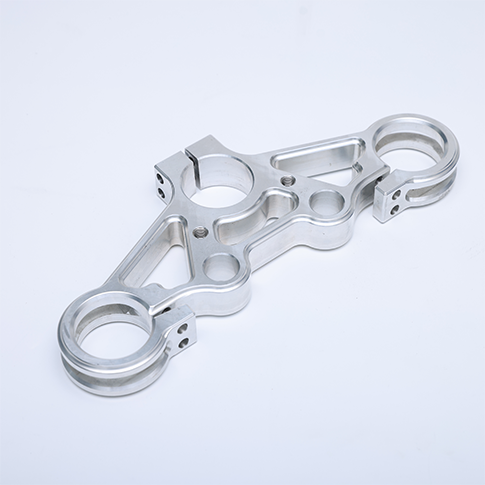
1. Parts with Complex Geometries
Components with intricate contours, irregular shapes, or multiple intersecting surfaces are strong candidates for 5-axis CNC machining. The additional rotational axes provide greater flexibility when positioning the cutting tool around the workpiece.
This is particularly useful when a part contains features that cannot be accessed easily from a single machining direction.
Typical Examples
Complex industrial machine components
Custom mechanical housings
Precision brackets with angled surfaces
Specialized tooling components
For these parts, 5-axis machining can simplify the machining sequence and reduce the need for multiple fixture changes.
2. Parts with Curved and Contoured Surfaces
Components with three-dimensional contours often require the cutting tool to maintain a suitable orientation as it follows the surface. 5-axis CNC machining allows the tool angle to change during machining, which can improve tool access and support more efficient cutting strategies.
Depending on the design and machining strategy, this capability can help reduce visible tool marks and improve surface consistency. The final surface quality still depends on tool selection, cutting parameters, machine condition, and finishing requirements.
Common Applications
Curved industrial components
Complex mold and die surfaces
Automotive components with contoured features
Specialized components with sculpted profiles
3. Parts with Angled Holes and Multi-Angle Features
Some components contain holes, slots, pockets, or mounting surfaces positioned at different angles. Machining these features on a 3-axis machine may require repositioning the workpiece several times.
5-axis CNC machining can tilt the tool or workpiece to access these features from different directions. When the geometry and machine configuration allow, this can reduce manual repositioning and help maintain the positional relationship between features.
Examples Include
Manifolds with angled passages
Mounting components with multiple angled holes
Mechanical parts with features on several faces
Custom fixtures and precision tooling
For internal passages or deep holes, the feasibility of machining depends on tool reach, access angles, feature dimensions, and the specific machine setup.
4. Parts That Require Machining on Multiple Sides
Some components need machining on several faces, with critical dimensions referenced to one another. Repeatedly removing and repositioning a part can introduce additional setup variation and increase production time.
With suitable workholding and machine access, 5-axis CNC machining may allow several faces to be machined in one setup or in fewer setups than a conventional approach. This can be beneficial when multiple features must maintain a defined geometric relationship.
Potential Benefits
Reduced manual workpiece repositioning
Fewer fixture changes for suitable part designs
Improved consistency between related features
More efficient machining of complex components
These benefits are not automatic. They depend on the component design, fixture accessibility, machining sequence, and inspection strategy.
5. High-Precision Components for Specialized Industries
5-axis CNC machining is used in industries where component geometry, dimensional control, and repeatability are important. The process is particularly useful when conventional machining would require several complex setups or specialized fixtures.
Aerospace
Aerospace components may include complex brackets, structural parts, and contoured components that require machining from multiple directions. Material requirements and strict inspection criteria also influence process selection.
Automotive
Automotive applications include prototype components, specialized mechanical parts, and selected performance components with complex shapes or angled features.
Medical Equipment
Some medical equipment components require compact geometries, curved surfaces, or carefully positioned features. Material suitability, cleanliness requirements, and applicable regulatory specifications should be confirmed for each application.
Industrial Machinery
Custom machine components, precision tooling, and specialized equipment parts may benefit from the flexibility of 5-axis machining when several surfaces or orientations need to be processed.
6. When Is 5-Axis CNC Machining Not Necessary?
Although 5-axis machining offers additional flexibility, it is not always the most economical choice. Parts with simple geometry and readily accessible surfaces can often be manufactured efficiently using 3-axis CNC machining.
For example, flat plates, basic mounting brackets, simple blocks, and components with straightforward holes or pockets may not require additional rotational axes.
When comparing machining options, consider:
Part geometry and tool accessibility
Dimensional and geometric tolerance requirements
Production quantity and delivery schedule
Fixture and setup requirements
Programming, machining, and inspection costs
The most suitable process is the one that meets the technical requirements without adding unnecessary manufacturing complexity.
7. How to Prepare a Part for 5-Axis CNC Machining
Before requesting a quote, prepare the technical information required for a manufacturing review. Complete information helps the supplier assess machinability, tooling access, workholding, and inspection requirements.
3D CAD model: Provide a complete model that defines the component geometry.
Engineering drawing: Specify critical dimensions, tolerances, datum references, and geometric requirements.
Material specification: Identify the material grade and any required material certification.
Surface finish: Indicate the finish requirements for critical and non-critical surfaces.
Order quantity: Specify prototype quantities, initial production volume, and expected repeat orders.
Additional requirements: Include heat treatment, coating, deburring, or inspection documentation where applicable.
A capable CNC machining manufacturer can review these details and recommend a practical machining strategy based on the part's geometry and production requirements.
Frequently Asked Questions
Are complex parts always better suited for 5-axis CNC machining?
Not necessarily. Some complex parts can be manufactured using 3-axis or 3+2-axis machining with suitable fixtures. The best method depends on tool access, required accuracy, setup complexity, and production economics.
Can 5-axis CNC machining reduce production time?
It can reduce setup and repositioning time for suitable components. However, programming, toolpath verification, machine availability, and machining parameters also affect the total lead time.
Which materials can be used for 5-axis CNC machining?
Depending on the machine, tooling, and application, materials may include aluminum alloys, stainless steel, carbon steel, titanium alloys, engineering plastics, and other machinable materials. The specific grade should be confirmed with the supplier.
Does 5-axis CNC machining guarantee higher accuracy?
No. Accuracy depends on the machine, workholding, tool condition, thermal stability, programming, and inspection process. The main advantage of 5-axis machining is its ability to access more orientations and potentially reduce setup changes.
What should I provide to get a quote for 5-axis CNC machined parts?
Provide a 3D CAD model or engineering drawing, material grade, order quantity, tolerance requirements, surface finish specifications, and any secondary processing requirements.
Conclusion
5-axis CNC machining is especially suitable for components with complex geometries, curved surfaces, angled features, and multiple machined faces. It can improve machining flexibility and reduce setup changes when the part design benefits from additional tool orientations.
Before choosing a manufacturing process, review the component design, tolerances, material, and production volume with an experienced CNC machining supplier. A design and process assessment can help determine whether 5-axis CNC machining provides a practical advantage for your application.