


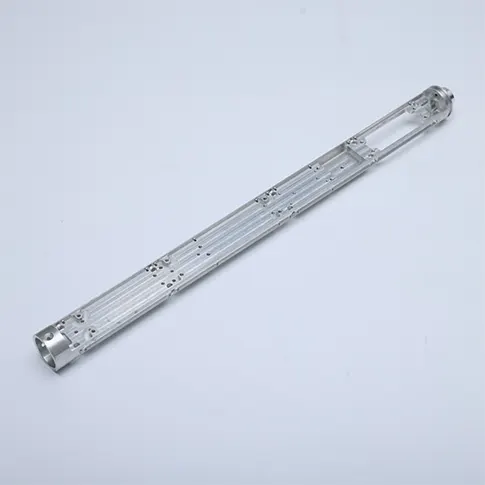
Thin-Wall Parts with 5-Axis CNC Machining | Design & Manufacturing
Thin-wall components are widely used in aerospace, automotive, robotics, medical equipment, and precision industrial applications. However, machining these parts can be challenging because low structural stiffness makes them more susceptible to vibration, deformation, and dimensional variation during material removal.
5-axis cnc machining for thin-wall parts provides flexible tool orientation and access to complex geometries. When combined with appropriate workholding, toolpath planning, and cutting parameters, it can help manufacturers produce lightweight components while meeting specified dimensional and surface finish requirements.
For OEM buyers and engineering teams, understanding the factors that affect thin-wall CNC machining helps improve part design, control production costs, and evaluate suppliers more effectively.
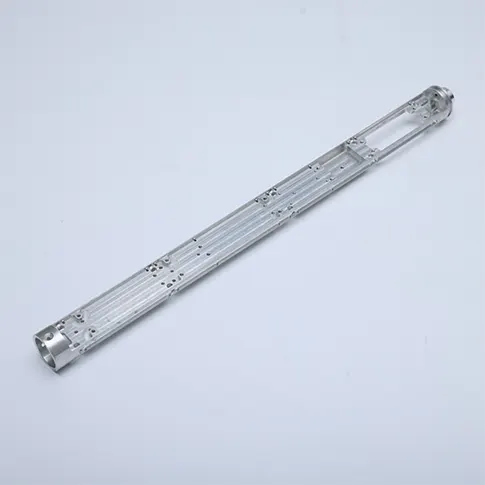
1. Why Are Thin-Wall Parts Difficult to Machine?
Unlike solid blocks, thin-wall components have limited stiffness. As cutting forces act on the material, the wall may deflect away from the tool. This can cause the finished dimension to differ from the programmed toolpath.
Common challenges in thin-wall CNC machining include:
Wall deflection: Thin sections can bend under cutting forces, making dimensional control more difficult.
Chatter and vibration: Low rigidity may increase the risk of vibration, poor surface finish, and accelerated tool wear.
Residual stress: Material removal can release internal stresses and cause the component to change shape.
Heat generation: Cutting heat and uneven temperature distribution may contribute to dimensional variation.
Workholding deformation: Excessive clamping force can distort a thin-wall part before machining even begins.
These challenges depend on the material, wall thickness, geometry, machining sequence, and required tolerances. A successful process must address the interaction between part design and manufacturing conditions rather than relying on machine capability alone.
2. How Does 5-axis CNC machining Help with Thin-Wall Components?
A five-axis CNC machine controls three linear axes and two rotary axes. The additional rotary motion allows the cutting tool or workpiece to be positioned at different angles, depending on the machine configuration.
For complex thin-wall components, 5-axis CNC machining offers several potential advantages:
Improved tool access: Angled tool orientations can help reach inclined walls, pockets, and complex surfaces.
Fewer setups: Multiple surfaces may be machined in one setup, reducing repeated positioning and setup-related errors.
Flexible cutting direction: Tool orientation can be adjusted to suit local geometry and improve cutting conditions.
Better process integration: Complex features can sometimes be produced with fewer intermediate operations.
However, five-axis capability does not automatically eliminate deformation or guarantee tighter tolerances. Thin-wall machining still requires suitable fixtures, stable cutting conditions, and an appropriate machining sequence. For simpler geometries, three-axis machining may remain more economical.
3. Select the Right Material and Wall Thickness
Material selection affects stiffness, machinability, heat transfer, and the amount of deformation that may occur during manufacturing. Wall thickness should therefore be evaluated alongside the component's dimensions, load requirements, and operating environment.
Aluminum Alloys
Aluminum alloys are widely used for lightweight housings, structural components, and precision parts. Their relatively low density and machinability make them common choices for thin-wall aluminum CNC machining. Nevertheless, thin aluminum walls can still deflect under cutting forces and may require careful fixture design and finishing strategies.
Titanium Alloys
Titanium alloys are used in applications where strength-to-weight ratio and corrosion resistance are important. Their machining behavior can involve significant heat concentration and tool wear, so cutting parameters, tool selection, and thermal management require particular attention.
Stainless Steel and Other Alloys
Stainless steel and other engineering alloys may be selected for corrosion resistance, strength, or application-specific performance. Their suitability for thin-wall machining depends on alloy grade, geometry, required wall thickness, and the available manufacturing process.
When requesting a quote, buyers should specify the exact material grade rather than providing only a general description such as aluminum or stainless steel. Material certifications may also be required for regulated or traceability-sensitive applications.
4. Optimize the Machining Strategy
A well-planned machining sequence helps reduce cutting forces and maintain dimensional stability. The best approach depends on the component geometry, material, available tooling, and inspection requirements.
Use Balanced Material Removal
Removing material unevenly from one side of a component can release residual stress and contribute to distortion. Where the geometry allows, a balanced machining sequence can help manage stress redistribution and maintain a more stable structure.
Use Suitable Cutting Parameters
Feed rate, spindle speed, axial and radial engagement, tool geometry, and tool condition all affect cutting forces and heat generation. Parameters should be selected according to the material and machining operation. Simply reducing the feed rate is not always the best solution because it can increase machining time and may negatively affect tool performance under unsuitable conditions.
Consider Tool Orientation and Engagement
One advantage of 5-axis CNC milling for thin-wall components is the ability to adjust tool orientation. Depending on the surface geometry, an appropriate orientation may improve tool access and cutting engagement. The programmer must also account for tool reach, holder clearance, machine kinematics, and collision risk.
Separate Roughing and Finishing Operations
Roughing removes most of the material, while finishing establishes the final geometry and surface condition. Leaving a suitable finishing allowance can help manage deformation caused by roughing. In some cases, intermediate stress-relief or stabilization steps may be considered, depending on the material, part requirements, and production process.
5. Design Workholding to Prevent Wall Deformation
Workholding is one of the most important factors in precision thin-wall machining. A fixture must support the component adequately without applying excessive force that changes its geometry.
Distribute clamping forces: Avoid concentrating excessive pressure on unsupported thin sections.
Support critical areas: Use suitable contact points or custom fixtures to reduce deflection during cutting.
Consider temporary support features: Depending on the design, sacrificial material or temporary ribs may help maintain rigidity until later machining stages.
Plan access for five-axis movement: Fixtures must provide tool clearance while maintaining stable workpiece positioning throughout rotary motion.
Check deformation after unclamping: A part may appear dimensionally acceptable while clamped but change shape after the fixture is released.
For complex components, fixture design should be evaluated early in the manufacturing process. Providing the supplier with the 3D model and critical dimensions can help identify workholding challenges before production begins.
6. Control Dimensional Accuracy and Surface Finish
Thin-wall components often combine low wall thickness with demanding dimensional requirements. To establish a suitable process, manufacturers should identify which dimensions and surfaces are functionally critical.
Important quality considerations include:
Wall thickness: Define the nominal thickness and acceptable tolerance for each critical section.
Flatness and profile: Specify geometric tolerances where they affect assembly or functional performance.
Position and alignment: Identify datum features and positional requirements for mating components.
Surface finish: Specify roughness requirements only where they are needed for sealing, fit, appearance, or function.
Inspection conditions: Consider how the part will be supported and measured, particularly when its shape can change under clamping force.
Coordinate measuring machines, optical measurement systems, and other appropriate inspection equipment may be used according to the component's geometry and tolerance requirements. The inspection method should be capable of verifying the features identified on the engineering drawing.
7. How Part Design Affects Thin-Wall CNC Machining Cost
Design decisions influence machining time, fixture complexity, tool requirements, inspection effort, and scrap risk. Buyers can often improve manufacturability by reviewing the design with the CNC machining supplier before releasing the final drawing.
Consider the following design factors:
Wall thickness: Extremely thin sections may require slower machining, more support, or additional process development.
Wall height: Tall, narrow walls can be more susceptible to vibration and deflection.
Internal corner radius: Appropriate radii can improve tool access and reduce the need for small, fragile tools.
Geometric complexity: Deep pockets, angled walls, and compound surfaces may increase programming and setup requirements.
Tolerance requirements: Tight tolerances on every feature may increase inspection time and production cost unnecessarily.
Batch quantity: Prototype, low-volume, and repeat production orders may require different approaches to tooling and fixture investment.
For OEM projects, early design-for-manufacturing (DFM) feedback can help identify opportunities to simplify machining without compromising the part's functional requirements.
8. What Should Buyers Ask a 5-Axis CNC Machining Supplier?
When sourcing custom thin-wall CNC machined parts, buyers should evaluate both technical capability and production control. The number of axes alone does not demonstrate that a supplier can reliably manufacture a particular component.
Does the supplier have experience machining similar wall thicknesses, materials, and geometries?
Can the supplier review 3D models and engineering drawings before quotation?
What workholding and machining sequence are proposed for the critical features?
How will dimensional stability be checked after unclamping and during final inspection?
Can inspection reports and material traceability documents be provided when required?
What are the expected prototype lead time, production lead time, and batch capacity?
To obtain a more accurate quotation, provide the 3D CAD file, 2D drawing, material grade, required quantity, critical tolerances, surface finish requirements, and any special inspection or certification needs.
Frequently Asked Questions
What is considered a thin-wall CNC machined part?
There is no single wall-thickness threshold that applies to every material and geometry. A wall is generally considered thin when its thickness and unsupported dimensions make it susceptible to deflection, vibration, or distortion during machining. Material properties, wall height, and machining conditions must all be considered.
Can 5-axis CNC machining prevent thin-wall deformation?
No. Five-axis machining improves tool access and can reduce the number of setups, but it does not eliminate cutting forces, residual stress, or workholding deformation. A suitable machining strategy, fixture design, and inspection process are still necessary.
Which materials are suitable for thin-wall CNC machining?
Aluminum alloys, titanium alloys, stainless steels, and other engineering materials may be used, depending on the application. The right choice depends on weight, strength, corrosion resistance, thermal requirements, machinability, and the specified wall thickness.
How can I reduce the cost of thin-wall CNC machined parts?
Review wall thickness, tolerances, internal corner radii, tool access, and inspection requirements with the supplier. Appropriate design changes, stable workholding, and an efficient machining sequence can reduce unnecessary processing time and manufacturing risk.
What files are needed for a thin-wall CNC machining quotation?
Typically, suppliers need a 3D CAD model, a 2D engineering drawing, material specifications, order quantity, required tolerances, surface finish requirements, and delivery expectations. Critical wall sections and inspection requirements should be clearly identified.
Request a Quote for Thin-Wall 5-Axis CNC Machining
Manufacturing thin-wall components requires careful coordination between part design, material selection, machining strategy, workholding, and quality inspection. Working with a supplier that reviews these factors early can help reduce production risk and improve consistency across prototype and production orders.
Send your CAD files, drawings, material requirements, and target quantity to discuss your custom thin-wall CNC machining project.